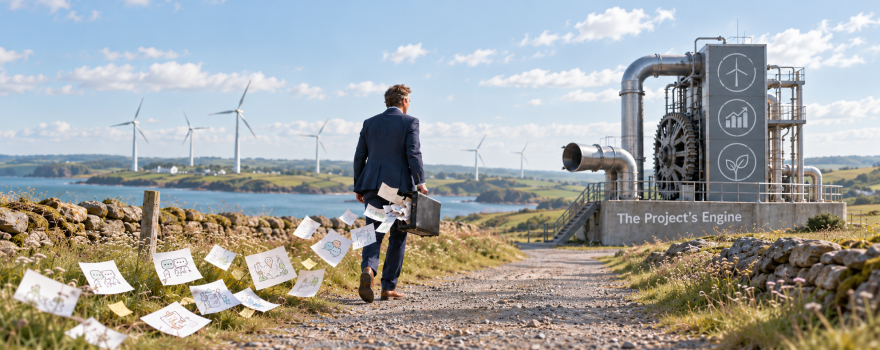
When engagement cannot reach the consequential decision

What we learn from community engagement must reach the right decision owner with enough evidence, authority, and time for a response. The reasoning then needs to travel back to the people affected. This is a question for project leadership and the whole development team. It is not a new name for an engagement technique.

Engagement Starts Before the Project Is Ready to Be Explained

Even a well-intentioned engagement process may feel to the host community like being asked to react to someone else’s project, rather than being invited into a meaningful conversation about what is entering their shared space. That is where many projects begin to lose local legitimacy.

ELSA’s 2026 Focus: Bridging the Gap to enable Renewable Energy Projects

As the need for energy security grows and climate goals become more pressing, it’s clear: we need to shift towards renewable sources – and wind energy plays a vital role in that transition. But wind (and other shared space projects) also raise valid local concerns. The real challenge isn’t “community engagement”; it’s understanding – and bridging – the gap.

The Host Community Case for Renewables AT PACE

Most communities support renewable projects, but oppose how they are built - often, a process that bypasses local realities and weakens shared purpose. Collaborative design strengthens fairness, cohesion, and local futures.